
I’m really interested in re-use of phone boxes and it’s fantastic to hear about others that have been repurposed in Bristol and beyond. I’ve been asked a fair bit recently about how ours came about and if I have any tips for how it might be done elsewhere, hence a blogpost to hopefully help others.
The K6 phone boxes are disappearing rapidly from public view, so if we value them as part of our street scene it makes sense to find other uses for them. BT pass them on under the Adopt a Kiosk scheme. The kiosk will cost £1, but you do have to be a charity. When I came to the Sea Mills project the kiosk had already been purchased by a local charity Sea Mills Community Initiatives who were initially going to use it as a book swap. If you are wanting to save one locally your first task is to find a charity willing to purchase it, this I would suggest is much easier than setting up a new charity to do it. The charity you find may well depend on the purpose you think you might put your phone box to, or you might want to involve them, and your local community in deciding that.
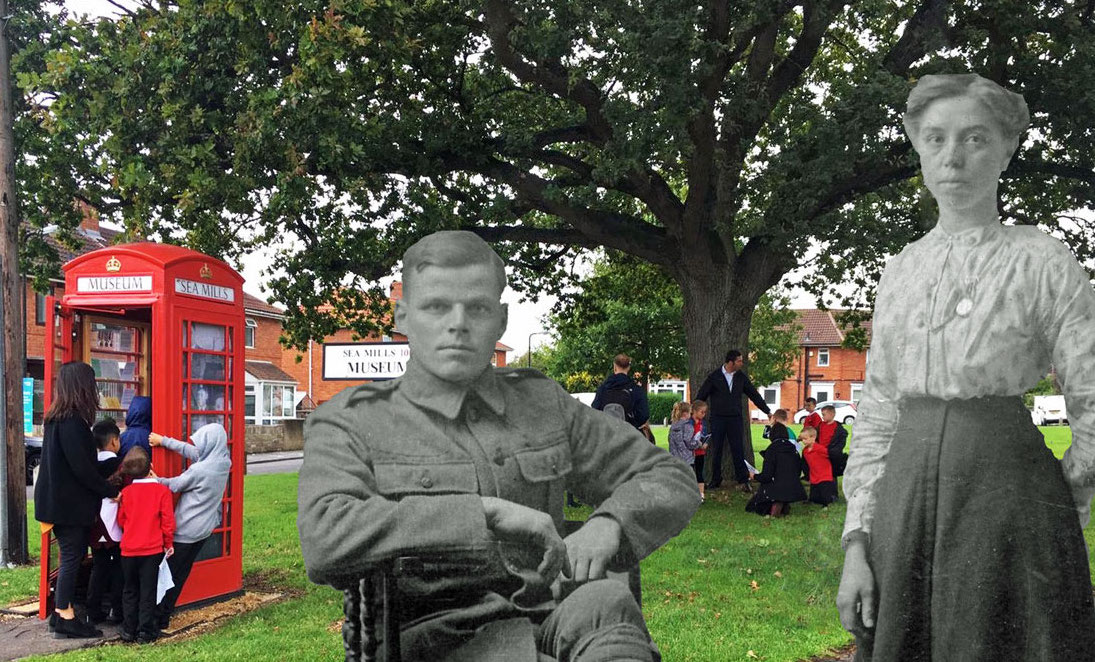
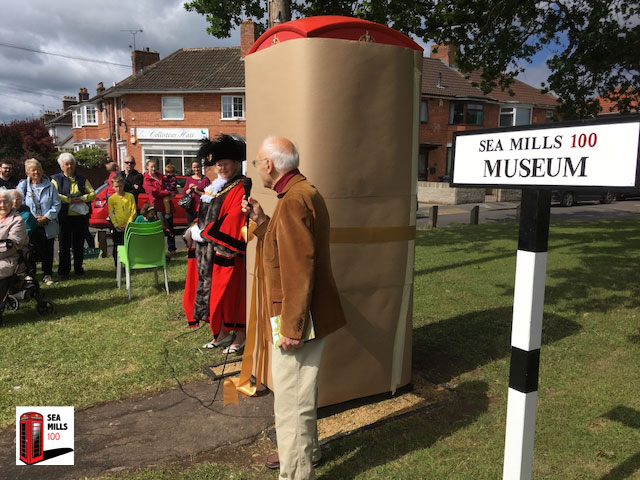
My involvement with converting our phone box came because of a desire locally to celebrate 100 years of our Garden Suburb of Sea Mills being built. Turning the dilapidated phone box into a mini-museum became the centrepiece of a small grant application to the National Lottery Heritage Fund (NLHF) for this celebratory project. I wrote the funding application and we received £10,000 from the NLHF and an additional £5000 from Bristol City Council who also wanted to celebrate 100 years of council house building, particularly highlighting the early estates in Hillfields and Sea Mills. The project grew and we received further funding from LinkAge to work with older people. While the phone box museum was the flagship, the project encompassed lots more, a weekend of celebratory events, an oral history project, intergenerational projects involving the local school, this website, social media and a book just to mention a few.
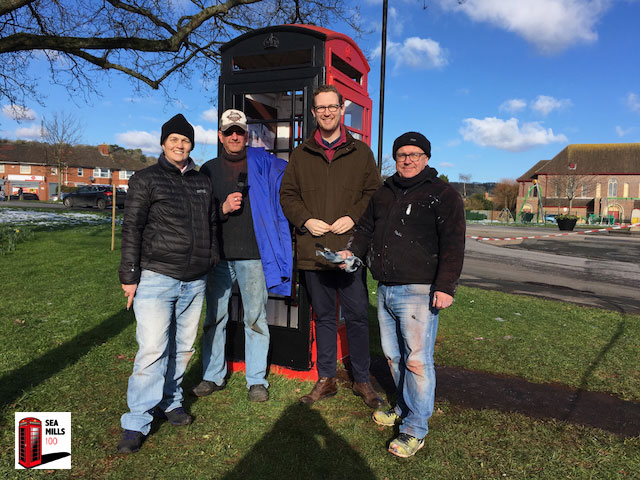
The major advantage gained by having the funding was that the project had a paid project manager tasked with meeting deadlines for the project, including the completion of the phone box museum in time for the opening weekend and celebratory events. This pushed the project along and made sure that someone was responsible for it actually happening. It did inject a certain amount of stress, almost all the practical work was done by volunteers and we were at the mercy of the British weather when we were getting things done. I can guarantee that the project manager worked for many more hours than they were paid.
Our box was in relatively poor condition when the project started, it had parts missing and lots of broken glass. The whole thing would not have been possible without a core of four local volunteers who worked on the box and weekends to bring it up to scratch. Their ingenuity and good humoured problem solving saved the day so many times. You might think that the more volunteers you have on a build the better, but the reality is that there’s a limit to how many people can work around such a small space at one time! Any work on the interior by definition was done by one person at a time, sometimes with a couple more working on the outside. For the initial cleaning work it was certainly essential to have someone around who was not scared of spiders, this turned out to be the role of the project manager as none of the volunteers would work on the inside until the eight-legged ones had been evicted. We found that having someone to talk to passers by was an asset as people were aways stopping to ask what we were doing. This was also a really important part of our community engagement, being visible in the community and making local people part of what was happening.
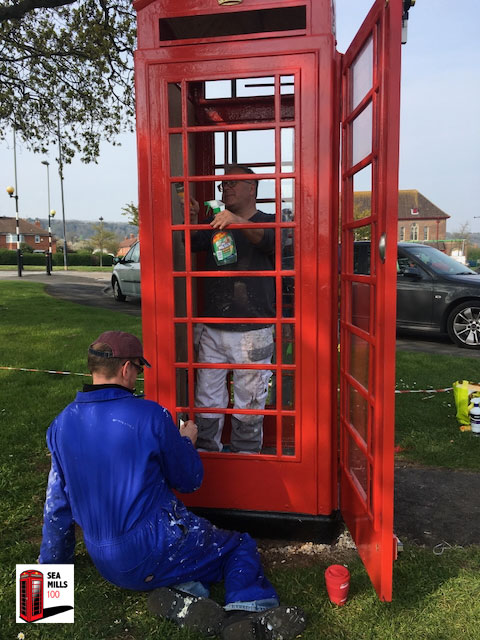
We needed quite a few spare parts for our box, these can be purchased from X2 connect or Unicorn Restorations, we also purchased paint locally at Avonmouth Paints, who were extremely helpful. At first we tried to be authentic and use enamel paint but it was very hard to work with and slow drying, problematic in a public space. In the end we when with a more modern paint mix of the same colour.
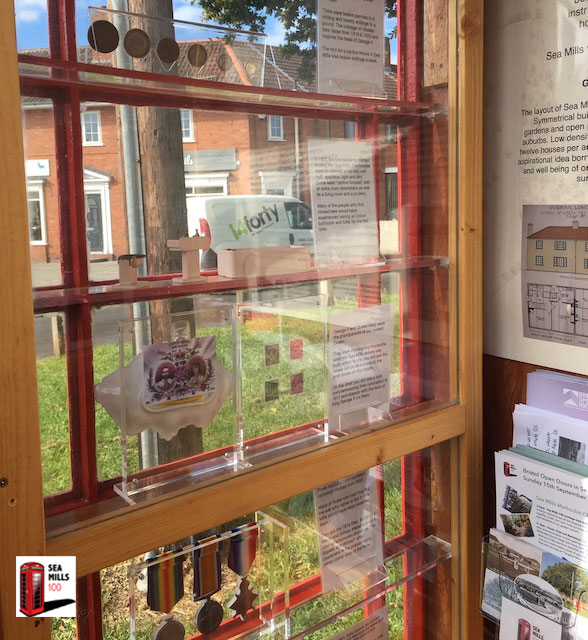
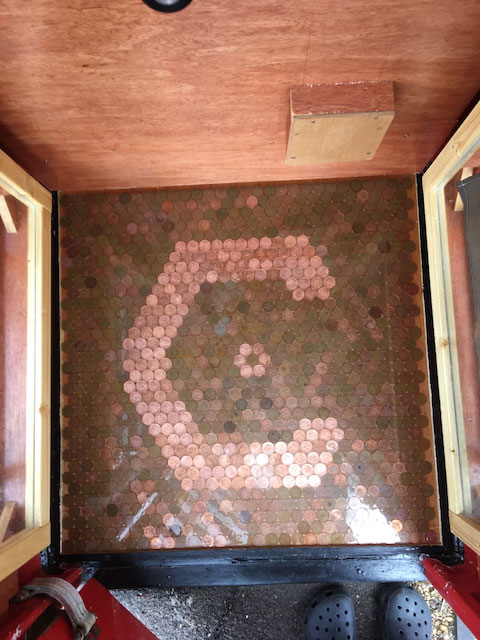
Our box was repainted and almost completely reglazed by our volunteers over a period of about six months. The inside was fitted out by one of them who is a local carpenter. The two cabinets which we use for displays were made to measure by him and fitted in the most awkward of spaces. We are probably most proud of the paintwork, which was done impeccably and is still maintained occasionally by one of those same volunteers. The floor is a mosaic of two pence pieces, it was made by volunteers off site and one of the major dramas for the build was the moment we realised it would not fit around the cabinets when we first tried to fit it. Order of the build is important! We sawed a bit off and shoved…
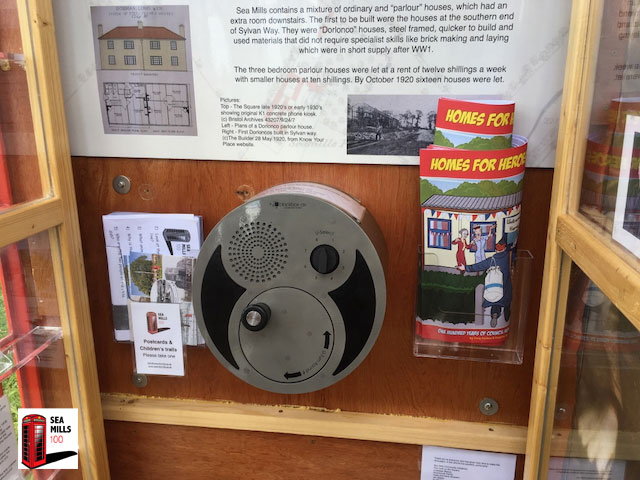
We have, I think been quite ingenious with the items inside our museum. We have tweaked these over the years. We now have an A1 poster frame for our main display rather than a bespoke size. This in theory makes it easier to change the display. I say in theory, because the fact that the display does not change that often nowadays is probably my only regret. We have shelves to display small objects and also a place hang a fabric banner or put up sheets of paper that can be seen from both inside and out. We also have an audio player which is powered by the user turning a handle.
Part of our initial budget was spent on insurance for our volunteers doing the work. We got some very expensive quotes as insurance companies really didn’t understand what we were doing and that it really was pretty low risk.
Some phone box reuse needs more continuing maintenance than others. Not all uses need the glass to remain in situ, eg use as a flower display. We chose to reglaze ours initially in safety glass, this does occasionally require maintenance and it’s a pig to clear up if it gets broken. We have replaced some with plastic panels. We also choose a format where people can enter the box to look at the displays and listen to audio. This is fun but as we did not want to leave it open overnight this does mean a volunteer has to open and close the box each day. We had a local locksmith fix two Gatemate locks to secure our door. An alternative would be to have displays that can be viewed from the outside only.
We have been really lucky with our community support for the museum, the Sea Mills 100 project worked with local school children to get their involvement right at the beginning, we would have liked to have done more in those early days, but the museum opened in 2019 and we all know what happened the year after that. Sea Mills Community Initiatives gave Sea Mills 100 use of the box for the duration of the project, which was a year, but as everyone loved it so much and could not see a better use for it the museum has continued. The Charity also continues to manage our funds for us within its bank account. Sea Mills 100 still runs local events such as occasional walks and a conversation group based around reminiscence at the local library. We also have a social media presence at Sea Mills 100 and Remembering Sea Mills.
It’s been a very fun project to do. I’d urge anyone taking it on to think not only about the initial fitting out of your box, but also who is going to look after it in the long term. This is something that would ultimately fall to the charity who buys it, so you do need to be careful that you are providing them with an asset and not a liability.
I’d love to hear about different types of phone box reuse, please comment if yo have done one, or have an example near you.